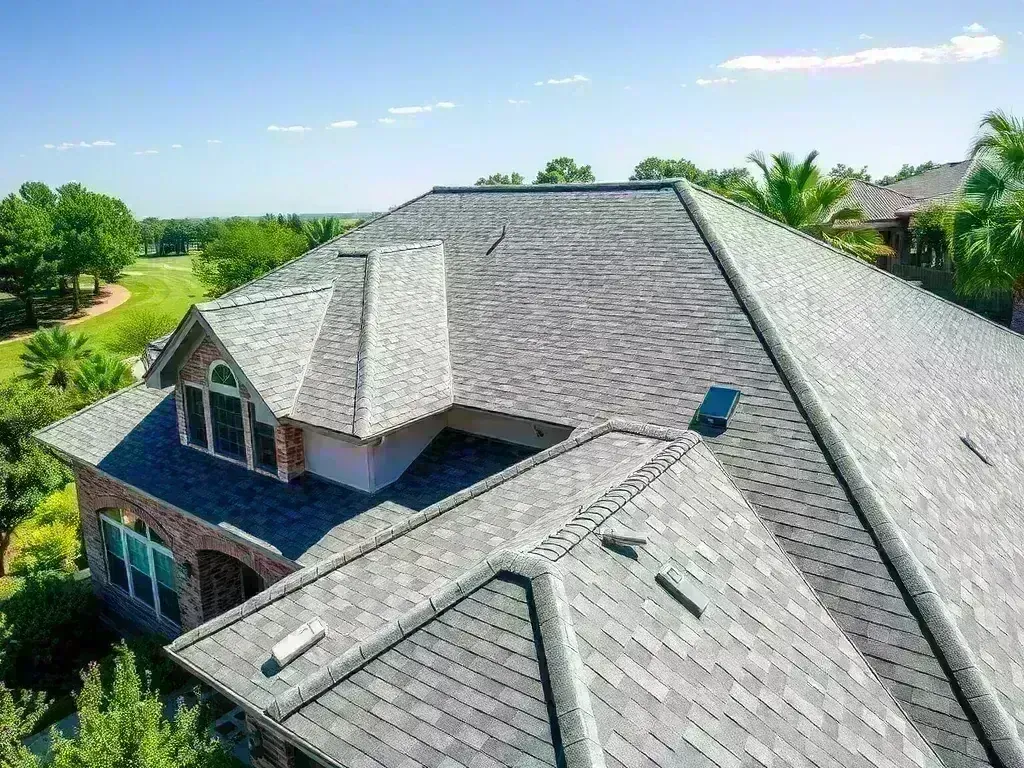
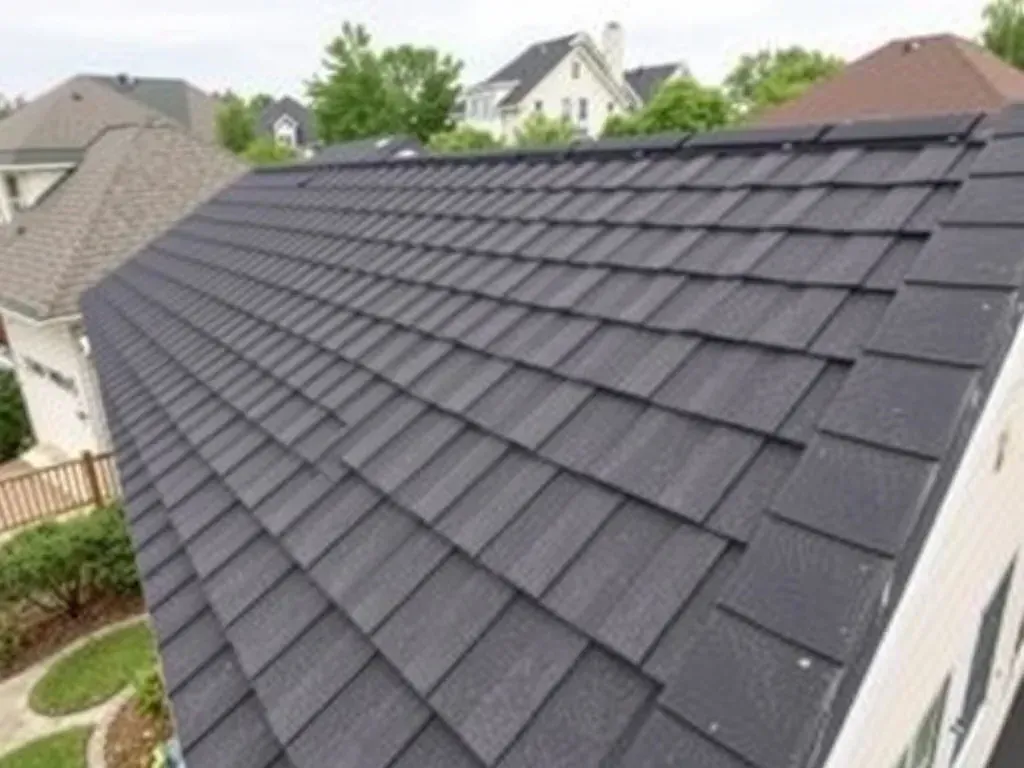
Attic heat is the quiet destroyer of roofs around here. When a roof deck bakes all July, asphalt shingles shed their oils faster and granule loss shows up years ahead of schedule.
We balance intake at the eave with exhaust at the ridge so the attic dries out instead of cooking the deck from below. Humid summers with frequent thunderstorms push damp air up there, and trapped moisture wicks into plywood sheathing until rot begins.
What balanced roof ventilation includes
- A ridge vent runs the length of the peak and gives rising heat a way out, which is the exhaust half of the system.
- Soffit vents at the eave pull cooler outside air in as intake, and they only work when nothing sits on top of them.
- Baffles keep loose-fill insulation from burying the intake path, so air still moves after a top-off.
- A solar or hardwired attic fan moves air on still August days when stack effect alone stalls out.
- A vapor barrier on the attic floor slows household moisture from seeping into the rafters and joists.
- Ridge cap shingles cover the vent slot and stop wind-driven rain from blowing straight through it.
- An ice-and-water shield along the eave backs up that detail when a Nor'easter drives water sideways.
Salt air from the Atlantic Ocean corrodes cheap fasteners long before shingles fail, so we spec screws and nails that hold up near Sandy Hook Bay. Ice dam removal in February usually traces back to a warm attic, not to worn shingles.
Signs your attic is running hot and wet
- Rot in the roof deck feels like a soft spot underfoot, and it spreads once water finds the wood.
- Decay around the chimney and skylight framing starts where flashing was hand-sealed instead of layered properly.
- Sag in the roofline means a rafter or ridge beam has been carrying wet lumber for years.
- Mold on attic sheathing means moisture is condensing and never leaving, which is the whole problem in one sign.
- Peeling paint on the fascia and soffit below the roofline points to heat and vapor pushing outward.
- Corroded fasteners and anchor plates mean salt air and moisture got past the underlayment.
- Shingles that curl, buckle, or show delamination have been through too many heat cycles already.
- Ponding water on a low-slope section is a drainage failure that ventilation alone will not fix.
Small drips that seep through a valley or wick along step flashing deserve a roof inspection before they turn into a systemic leak across a ceiling.
Roofing materials we vent and repair around
- Asphalt shingles, from three-tab shingle to architectural shingle profiles, are the most common roof we open on residential roofing work.
- Wood shake and cedar shake need extra intake, because the gaps between shakes move air but trap debris too.
- Slate and clay tile breathe differently, and we plan vent placement around tile instead of cutting through it blind.
- Concrete tile sheds water well but holds heat, so exhaust placement matters more than it does on shingle.
- Metal panel roofs, from standing-seam panel to corrugated panel, need vent details matched to the ribs.
- Membrane roofs such as TPO, EPDM, and PVC membrane systems vent through curbs and edge metal, not ridge slots.
- Built-up roof and modified bitumen assemblies on older flat sections, including tar and bitumen felt layers, need their own intake plan.
- Synthetic underlayment, roofing felt, and tar paper each change how a deck handles vapor, so we check what is up there.
We buy roofing materials from makers we can call for a warranty claim, including GAF, Owens Corning, and CertainTeed. America's largest shingle makers publish their own ventilation ratios, and we size intake and exhaust to those numbers instead of guessing.
Parts we check while the roof is open
- Drip edge along the eave and rake keeps water off the fascia and sends it toward the gutter and downspout.
- Step flashing at sidewalls, counter-flashing, and chimney flashing are where most attic moisture complaints begin.
- Pipe flashing, and the pipe boot or vent boot on plumbing stacks, cracks under UV and should be replaced with the vent work.
- A skylight, dormer, or chimney is a penetration where vent work has to respect existing waterproofing.
- A parapet, scupper, or coping on a flat section handles drainage in a way ridge vents never touch.
- Roof deck panels, whether plywood, OSB, or older board decking, get probed for moisture content before we quote.
- Ridge, hip, gable, and verge geometry decides where a vent physically fits on your roofline.
- Mastic or roof cement belongs as a backup sealant at a chimney chase, never as the main line of defense.
- A mansard, gambrel, canopy, or awning section traps heat in pockets and usually needs its own intake path.
- Overhangs and eave depth set how much intake area you have once the gutter line is subtracted.
- Battens and counterbattens over a metal roof create a drainage plane above the substrate, and older purlins carry load in ways we check first.
- Trusses, rafters, joists, and ridge beams get a look from the attic side to confirm the framing under the deck is sound.
How the work runs, step by step
- Roof inspection first, from the attic and from the rooftop, with a ladder, scaffold where needed, and a safety harness every time.
- We measure net free area, check the building code, and hand you a roof estimate with the numbers spelled out.
- We mark the cut with a roofing square, then pull the pry bar and roofing shovel on any decking that is too far gone.
- New decking is fastened with ring-shank nails from a nail gun fed by an air compressor, with screws where the substrate calls for them.
- The starter course goes down first, then staggered courses across the field, with the field course lapped to the maker's spec.
- Soffit vent openings get cut and screened, and the ridge vent is set under the ridge cap with a hand-sealed bead at each end.
- Every penetration we touched gets new sealant, caulk, or adhesive, and a flat section gets recoated if it needs it.
- Debris goes into the dumpster, the yard gets swept, and snow guards go back on a metal panel roof if it had them.
Cost depends on how much ridge and soffit area your attic has, whether sheathing is soft, and whether a flat section needs membrane work too. A straightforward job usually finishes in a day, and anything that turns up rot adds time.
Where ventilation meets energy efficiency
- Green roofing choices pay off only when the attic beneath them moves air, so we size the vent before we discuss surface options.
- Energy efficiency comes from a cool, dry deck, and an attic fan running in August does more for the bill than most surface upgrades.
- A roof maintenance tip worth keeping: check the soffit vents after pollen season, because debris kills intake quietly.
- Roofing technology has moved on, and ridge vents, powered attic fans, and moisture sensors now catch problems before ceiling stains appear.
- Sustainability in roofing means keeping the deck in service longer, since the lowest-waste shingle is the one you do not replace early.
- Gutter installation and downspout work belong in the same conversation, because a clogged gutter backs water under the eave and drowns the intake path.
Our service areas cover Navesink, Lincroft, Belford, Port Monmouth, and Leonardo, from the Navesink River side toward Twin Lights of Navesink and down past Poricy Park.
Customer satisfaction on this work comes down to two things: the attic stays dry, and the invoice matches the estimate. Our customer testimonials keep coming back to those two points, which is why we put the scope in writing before we start.
Middletown Roofing Pros is licensed and insured, and we would rather tell you a repair is enough than sell a system you do not need. Call 7324191350 for a free estimate, and ask any roofing roofers you talk to for the same thing in writing.